 Social Hungama Hindi News, हिंदी न्यूज़ , Hindi Samachar, हिंदी समाचार, Latest News in Hindi, Sarkari Result
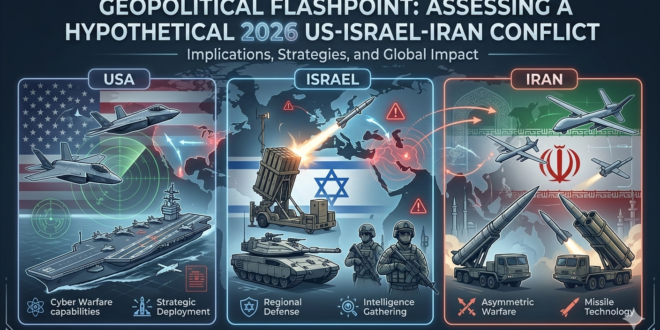
As of March 2026, the long-simmering tensions in the Middle East have erupted into a devastating, full-scale conflict. The direct war between Iran, Israel, and the United States has fundamentally altered global geopolitics, disrupted international trade, and triggered a profound humanitarian crisis.
If you are trying to make sense of the rapidly developing news, here is a comprehensive, up-to-date breakdown of the current situation.
1. How the Conflict Escalated
The region went from a “shadow war” to an all-out conflict in the span of a few days. The war officially commenced on February 28, 2026, when the U.S. and Israel launched massive, coordinated airstrikes across Iran.
Key catalysts of the current crisis include:
Decapitation Strikes: The joint U.S.-Israeli strikes targeted key Iranian military infrastructure and underground bunkers. These strikes resulted in the death of Iran’s Supreme Leader, Ali Khamenei, essentially decapitating the Islamic Republic’s command structure.
Operation True Promise IV: In retaliation, Iran launched massive waves of drones and ballistic missiles targeting Israel, as well as U.S. military bases stationed in Gulf countries like the UAE, Kuwait, and Qatar.
Naval Confrontations: The conflict expanded into the ocean when a U.S. submarine torpedoed and sank the Iranian warship IRIS Dena. In response, Iran has attacked U.S.-owned oil tankers.
2. The Current Battlefield (As of March 2026)
The scope of the war has expanded rapidly, dragging in neighboring nations and multiple fronts.
The Gulf States: Iran has fired missiles at U.S. airbases in the UAE (Al Dhafra) and Kuwait (Ali Al Salem). Drone debris has also caused injuries and damage in civilian and industrial zones in Abu Dhabi and Bahrain.
Lebanon and Hezbollah: The conflict has spilled over into Lebanon. Hezbollah has fired rockets at northern Israel, prompting heavy Israeli airstrikes on Beirut’s southern suburbs.
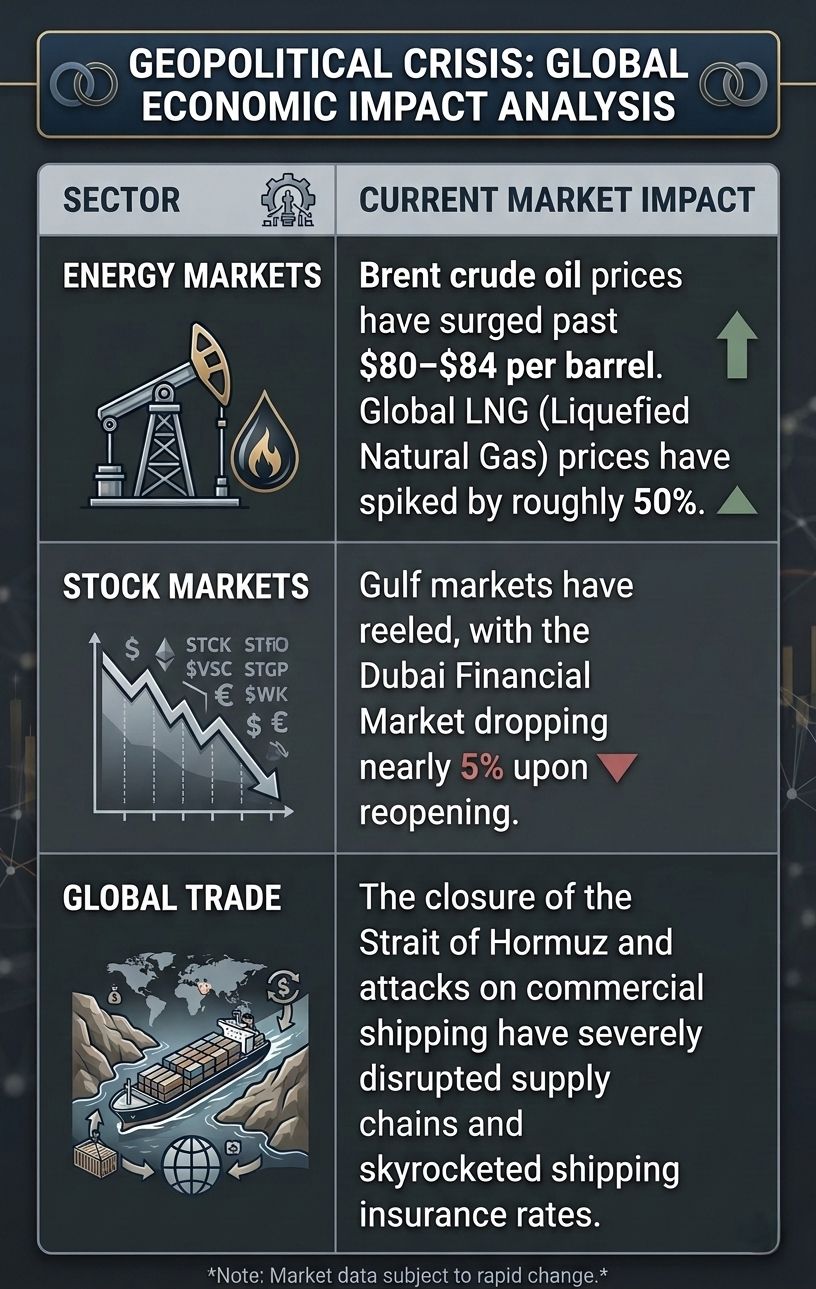
The Strait of Hormuz: In a major strategic move, Iran announced the closure of the Strait of Hormuz—a crucial maritime chokepoint—cutting off a waterway where roughly a fifth of the world’s daily oil supply transits.
3. The Devastating Humanitarian Cost
Beyond the geopolitical maneuvering, the human toll of this war is catastrophic. The United Nations has declared the crisis in West Asia a “major humanitarian emergency.”
In just the first week of fighting, human rights organizations and health ministries have reported devastating losses. Over 1,200 people have been killed in Iran (including heavy civilian casualties), more than 200 people have died in Lebanon, and casualties have been reported across Israel and the Gulf states. Additionally, six U.S. service members have lost their lives.
4. Global Economic Fallout
A war in the heart of the world’s energy-producing region has immediate consequences for the global economy.
What Happens Next?
The path to de-escalation remains incredibly narrow. While Iranian President Masoud Pezeshkian has confirmed that mediation efforts are underway, military leaders on all sides are digging in. U.S. President Donald Trump has stated that the U.S. intends to thwart Iran’s missile programs entirely, while Iran’s Revolutionary Guard Corps (IRGC) has warned of a “prolonged war.”
The world is watching closely to see if diplomatic channels can successfully broker a ceasefire before the conflict spirals into an even wider global war.
TikTok Ban in the US: App Shutdown, Return & What Happens Next | Full Timeline